The Story
By the turn of the millennium, Jim Engh was the most talked-about new architect in American golf — a designer who ignored the textbook and drew courses the way a kid might dream them, all muscle-flexing bunkers and greens sunk into bowls. At Tullymore, the second course at the resort then known as St. Ives, he was handed more than 800 acres of woods, meadows, and wetlands an hour north of Grand Rapids, with Shinglebolt Creek winding through it. The name reached back across the Atlantic: in Irish place-naming, Tullymore means 'great hill.'
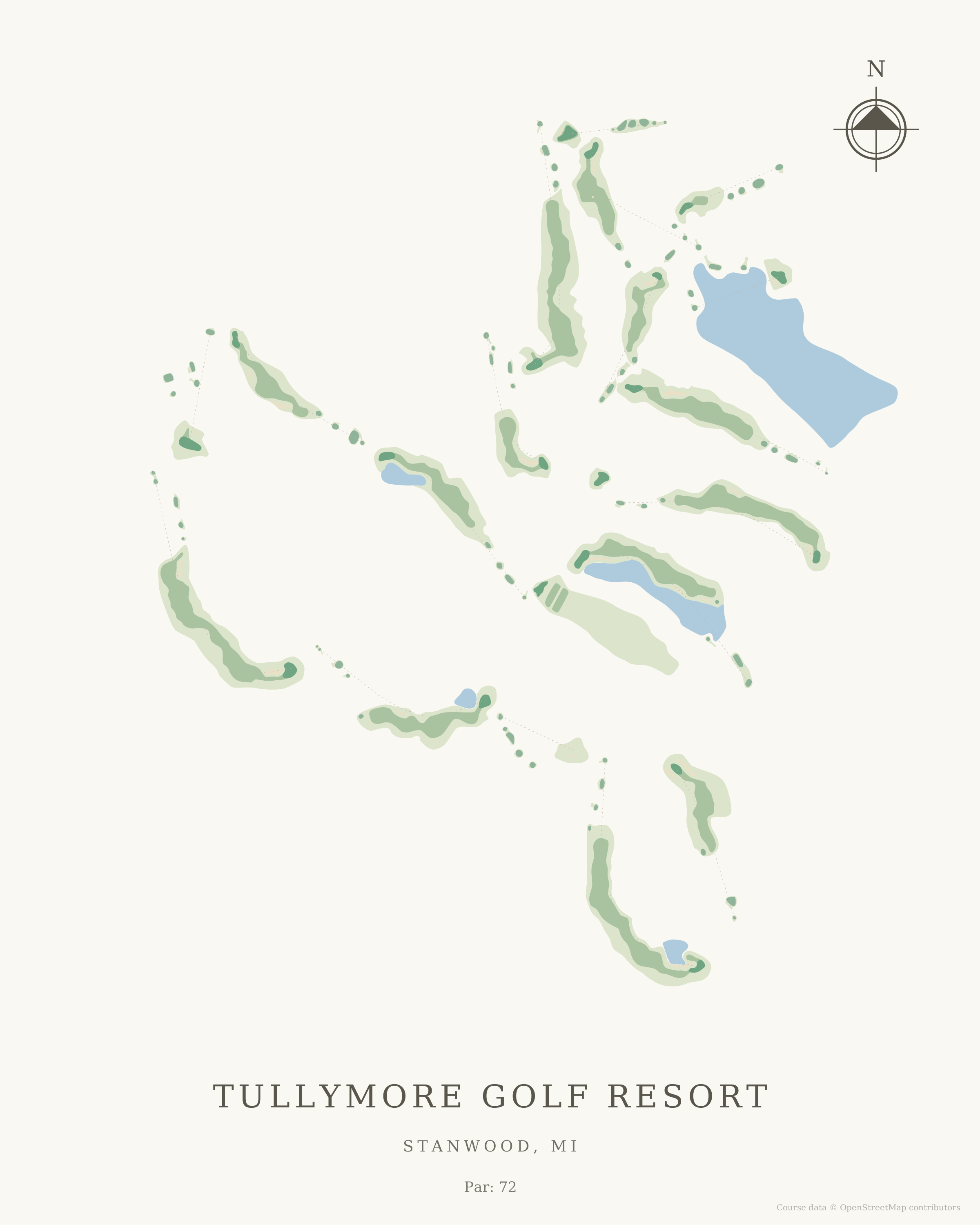
What Engh built there refuses to behave like a normal golf course, starting with the scorecard: five par 3s and five par 5s, an almost unheard-of arrangement that means nearly every hole is either a one-shot puzzle or a risk-reward gamble. Long, squiggly bunkers snake down the fairways, boardwalk paths carry golfers across protected wetlands, and the par-3 15th plays entirely over marsh. The closing hole — a par 5 daring you down the length of a pond — is regularly called one of Michigan's greatest finishers.
The golf world noticed immediately. Golf Digest named Tullymore the best new upscale public course in America for 2002, and when the magazine's 100 Greatest Public Courses ranking debuted in 2003, Tullymore entered at No. 14 in the nation — a stunning arrival for a course in rural Mecosta County. It has spent most of the years since somewhere on that list.
Two decades on, Tullymore remains the reason golfers detour into the middle of Michigan's mitten: a genuine original, paired with its more traditional sister course St. Ives just down the road, where every round produces at least one hole you'll be describing to friends for weeks.