The Story
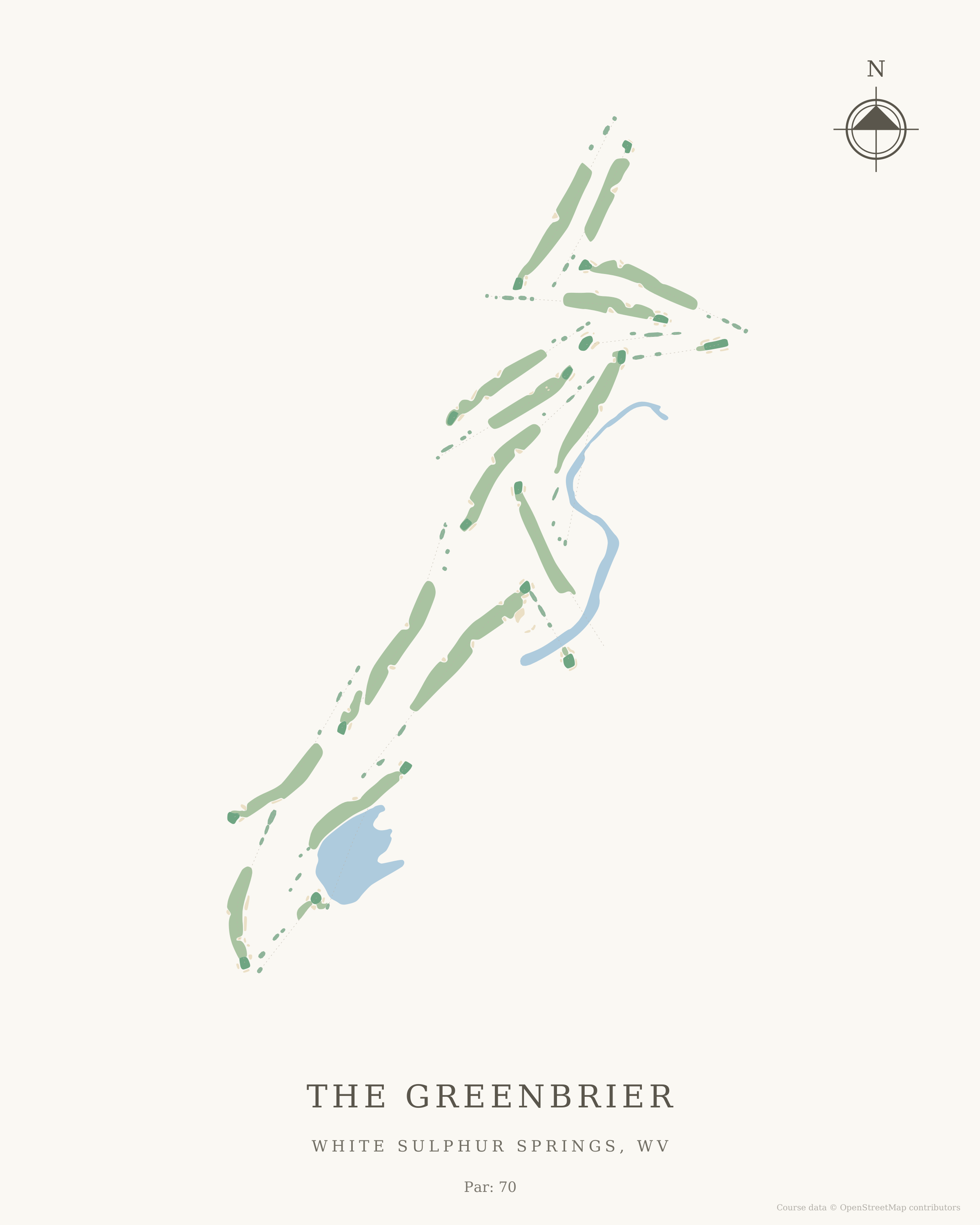
Guests were taking the waters at White Sulphur Springs before there was a United States — the resort traces its history to 1778 — and by the mid-1800s the sprawling Old White Hotel had made it the South's great gathering place. In 1913, the resort turned to Charles Blair Macdonald, the father of American golf course architecture, and his engineer-protégé Seth Raynor. The course they opened in 1914 took its name from the beloved hotel: The Old White.
Macdonald built it the way he built everything — as an anthology of the greatest holes in golf. The 8th is a Redan, after North Berwick; the 13th an Alps, after Prestwick; the 15th an Eden, from St. Andrews. For decades the man playing those templates most often was Sam Snead, who arrived as The Greenbrier's club professional in 1936 and remained its living emblem until his death — serving in his later years as golf professional emeritus, greeting guests a few steps from the first tee.
In 2010 the PGA Tour came to the mountains, and The Old White delivered one of the great debuts in Tour history: Stuart Appleby closed with a 59 — just the fifth sub-60 round the Tour had ever seen — to win the inaugural Greenbrier Classic by a stroke. The Tour stayed a decade, minus one heartbreaking gap: the catastrophic June 2016 flood, a once-in-a-thousand-year deluge, buried the course and forced the tournament's cancellation. Architect Keith Foster led a complete restoration, and The Old White reopened barely a year later, its Macdonald bones intact.
That resilience is the course in miniature. More than a century old, template holes still teaching strategy the way Macdonald intended, a white colossus of a hotel over your shoulder — playing The Old White is playing American golf history from the inside.