Custom Tetherow Golf Club artwork, made to order — a hand-styled map of the course, a painting-style print of your favorite hole, or a finished photo from your round.
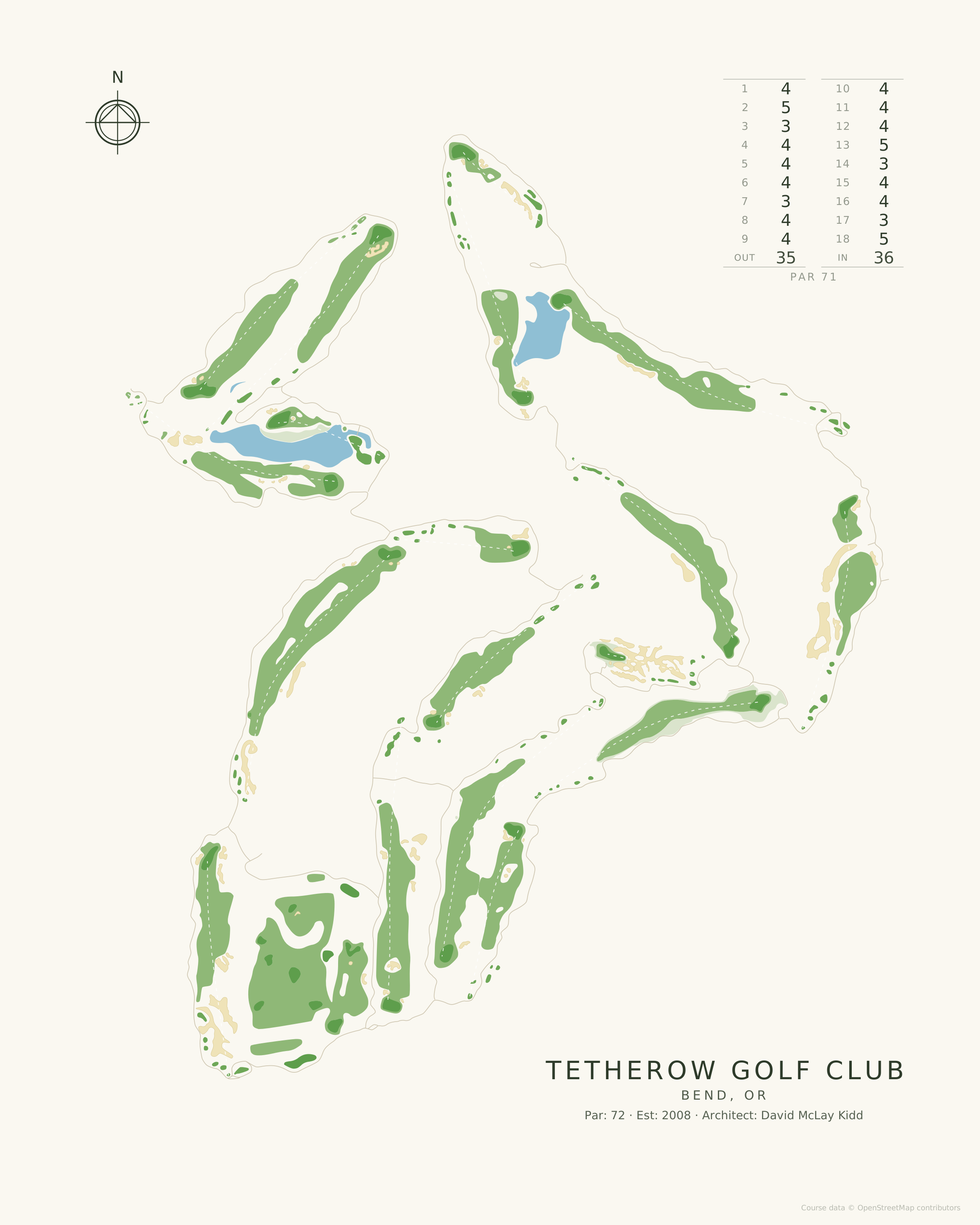
Created from actual data — every tee, fairway, bunker, and green, all in vivid detail.
A decade after David McLay Kidd made his name with the original course at Bandon Dunes, the young Scot came back to Oregon — this time inland, to a fire-scarred stretch of high desert a few miles southwest of downtown Bend. Where others saw burned-over scrubland, Kidd saw the raw material of a heathland links: sandy volcanic soil, natural movement in the ground, and enough elevation to put the Cascade peaks on the horizon of half the holes.
The development had begun life in 2004 under the placeholder name Cascade Highlands; in 2005 it was renamed Tetherow, honoring Solomon Tetherow, the pioneer who led a wagon train through this country in the mid-1800s on the road from Missouri to Oregon. Construction started in 2006, and the course opened in 2008 — seeded wall-to-wall in fescue, the running, fast-and-firm grass of the Scottish links, which almost nobody was using in the American West.
Tetherow arrived in Kidd's boldest period, and it shows. The fairways heave and tumble, the bunkers are ragged-edged and mean, and the greens ask for the ground game — a bumped hybrid from forty yards is often the smarter play than a lofted wedge. Golfers argued about it from the day it opened, which is usually the mark of a course worth arguing about. Play it with links eyes and it reveals itself as one of the most original designs of its generation.
It is also one of the most beautiful. Faded gold fescue against black volcanic rock, ponderosa and juniper at the margins, Mt. Bachelor and the Three Sisters standing over the back nine — nothing else in central Oregon looks or plays like it. Tetherow was the first course in Oregon certified as an Audubon International Signature Sanctuary, and it remains the high desert's answer to the links of Kidd's homeland.

Museum-quality Tetherow map art, traced from real course data — every ragged bunker, fescue fairway, and green of David McLay Kidd's high-desert links in Bend, Oregon. Four designs, six sizes, or personalized with your own round photo.
Course data © OpenStreetMap contributors (ODbL)