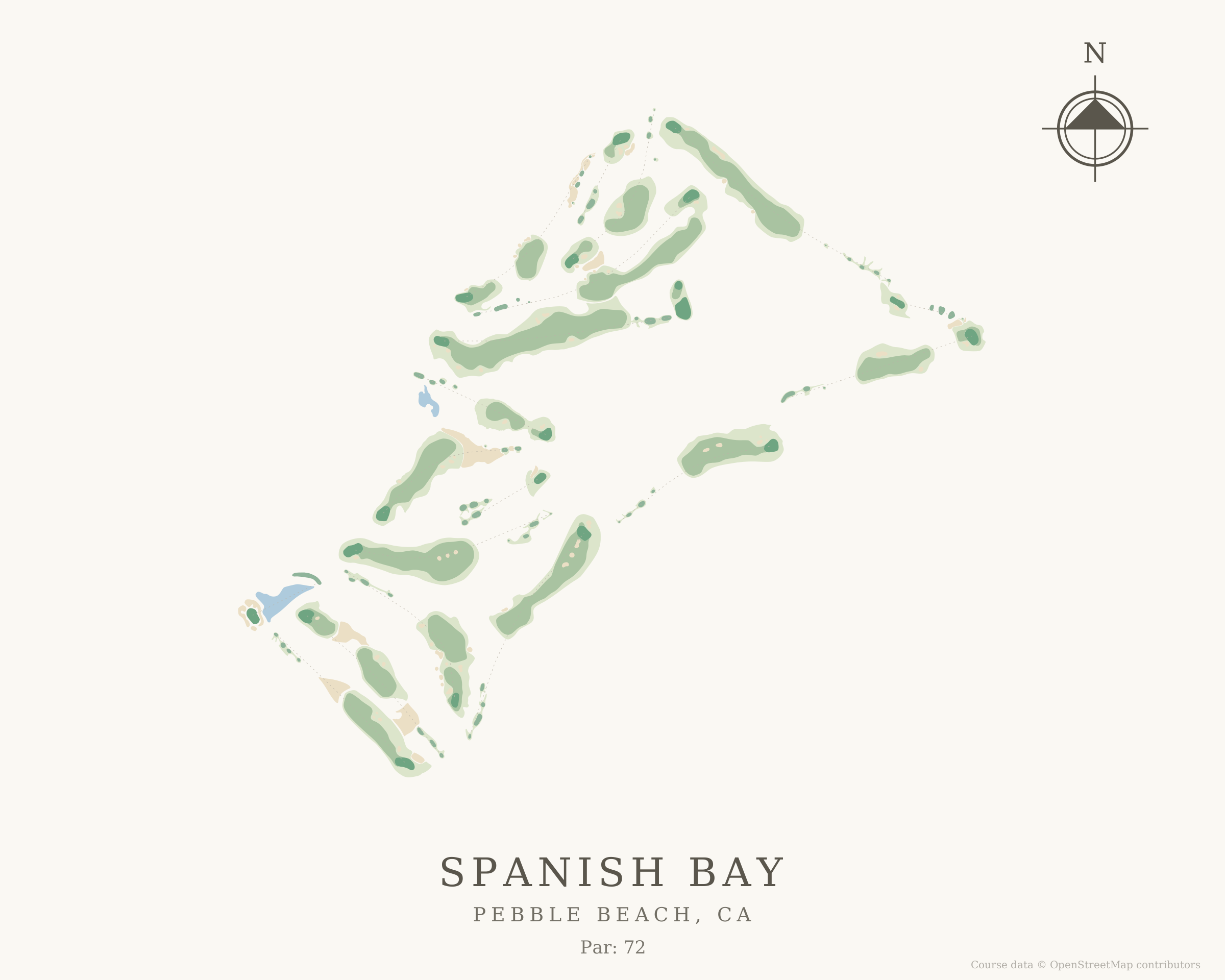
The Story
Spanish Bay takes its name from the explorers who camped here first — Gaspar de Portolá's Spanish expedition came ashore on this beach in 1769, searching for Monterey. Two centuries later the land had been all but used up: since the early 1900s the dunes had been strip-mined for sand to feed a glass works, leaving a scarred coastal flat at the northern gate of the Del Monte Forest. What happened next is one of golf's great reclamation stories.
In the 1980s, Pebble Beach Company set out to build a true links on the ruined ground, and assembled an unlikely trio: architect Robert Trent Jones Jr., five-time Open champion Tom Watson, and former USGA president Sandy Tatum — three men united by their love of Scottish golf. The irony was rich: more than half a million cubic yards of sand had to be hauled back onto a site that had spent decades shipping sand out. The rebuilt dunes were planted with more than 100,000 native seedlings a year from an on-site nursery, one of the most ambitious habitat restorations ever attempted alongside a golf course.
On November 5, 1987, the course opened, and Watson shot 67 in the inaugural round. Walking off, he declared: 'It's so much like Scotland, you can almost hear the bagpipes playing.' The remark became the course's identity. Ever since, a kilted bagpiper has walked the dunes at dusk, piping the course to sleep — golf's most beloved closing ceremony, and reason enough for guests who have never swung a club to gather on the boardwalk at sunset.
Now Spanish Bay is being reimagined again. Gil Hanse and Jim Wagner — restorers of major championship venues across the country — will close the course on March 18, 2026 and rebuild it as a modern California coastal masterpiece, reopening in spring 2027, just before the U.S. Open returns to Pebble Beach. A print of the original is a keepsake of the links as Watson, Tatum, and Jones first dreamed it.