The Story
Ten thousand years ago, central Wisconsin lay under glacial Lake Wisconsin, and when the ice dam broke and the water drained away, it left behind a vast plain of sand. For a century that sand grew red pines in plantation rows — until a young golf-construction hand named Craig Haltom, scouring the state for the perfect site, walked into the dunes near Nekoosa and realized he was standing on golf land as pure as any coastline.
Haltom's discovery found its way to Mike Keiser, the man who had already conjured Bandon Dunes out of the Oregon coast. One site visit led to another, and in 2013 Keiser and his sons Michael and Chris bought 1,700 acres of the old lakebed. For the first course they hired Bill Coore and Ben Crenshaw — their fifth project for Keiser, and the first one nowhere near an ocean. The crews tore out the pine plantation and uncovered the rolling, exposed sand barrens beneath, in what was described as the largest sand-barrens restoration in Wisconsin's history.
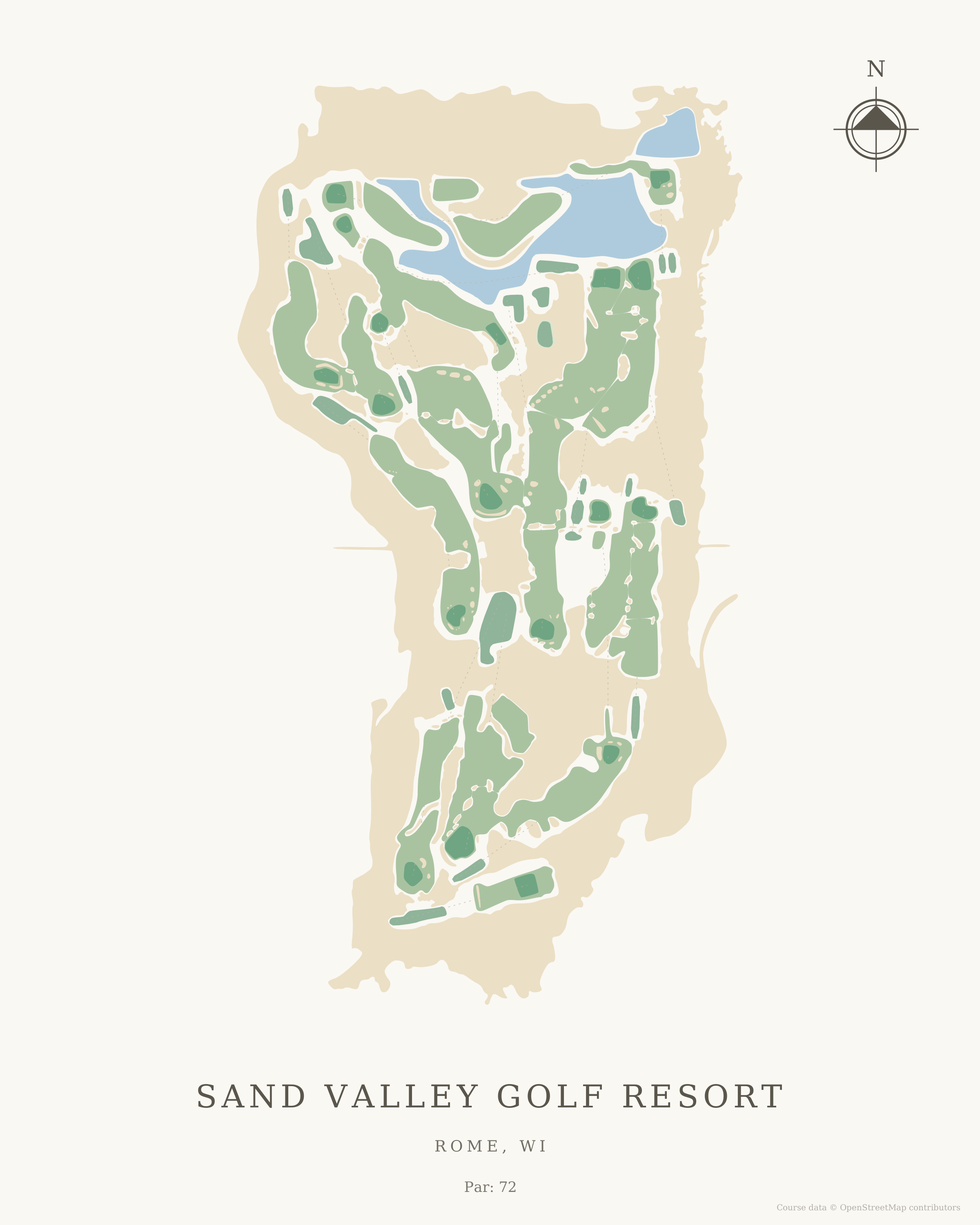
Sand Valley opened in 2017 and was named Golf Digest's Best New Course that year. Coore and Crenshaw's wide fescue fairways sweep between blown-out dunes and ridges of native sand, playing firm and fast — heathland golf, in the middle of the Midwest, that feels almost impossibly natural because so much of it simply is.
The course became the cornerstone of America's fastest-growing golf destination: Mammoth Dunes, the Sandbox, Sedge Valley, and the resurrected Lido followed on the same sand. But the original Sand Valley is where it started — proof that you don't need an ocean, just the right land and the patience to let it show itself.