The Story
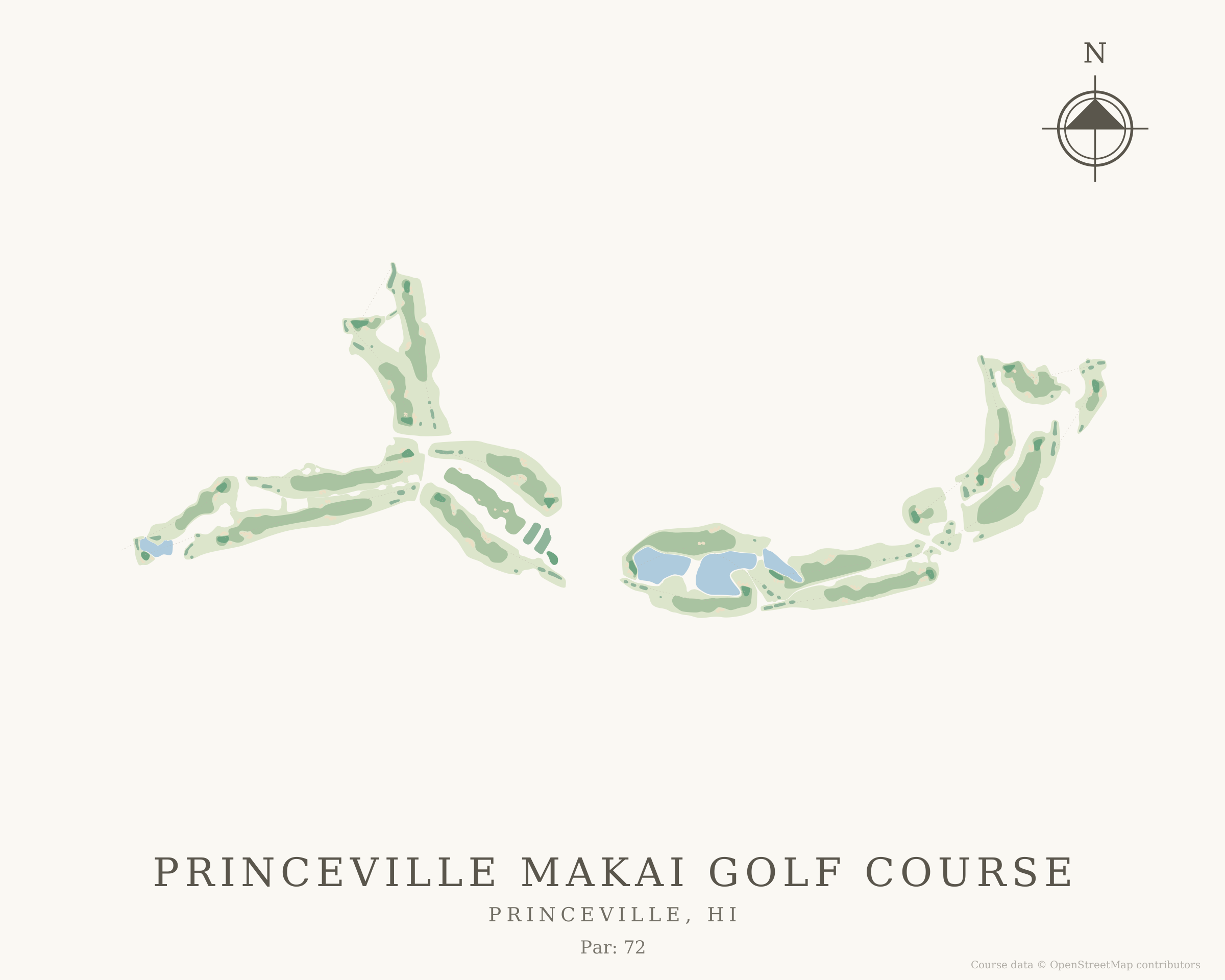
In 1971, Robert Trent Jones Jr. stepped out of his father's long shadow with his first solo design, on land most architects only dream about: the bluffs of Princeville, high above Hanalei Bay on Kauai's north shore. 'Makai' is Hawaiian for 'toward the sea,' and Jones took the word as an instruction. He laid out twenty-seven holes in three nines — Ocean, Lakes, and Woods — and routed the golf to the cliff edges in the middle of each loop, so the Pacific arrives not as a constant backdrop but as a destination you play toward, twice.
The course put Kauai on golf's map almost single-handedly. Jones lobbied to bring the World Cup here in 1978, and the world came: the American side of John Mahaffey and Andy North held off Australia's Greg Norman and Wayne Grady for the title, with Mahaffey taking the individual trophy. A decade later the LPGA arrived, and from 1986 through 1989 the Women's Kemper Open crowned champions at Makai — Juli Inkster, Jane Geddes, and Betsy King back-to-back in the Hall of Famer's prime.
In 2009, nearly forty years after opening it, Jones returned to renovate his own debut — combining the Ocean and Lakes nines into today's eighteen-hole Makai Course and regrassing it wall-to-wall in seashore paspalum, a turf that thrives on salt air and gives the course its impossibly green glow against the blue water.
What golfers carry home is the setting as much as the score: the par-3 7th daring you across an ocean cove, rain ghosting over the mountains behind Hanalei, and — in winter — humpback whales breaching beyond the cliffs while you try to hold a two-club wind. Few courses anywhere feel this far from the mainland's version of golf, because few are.