Custom Pinehurst No. 2 artwork, made to order — a hand-styled map of the course, a painting-style print of your favorite hole, or a finished photo from your round.
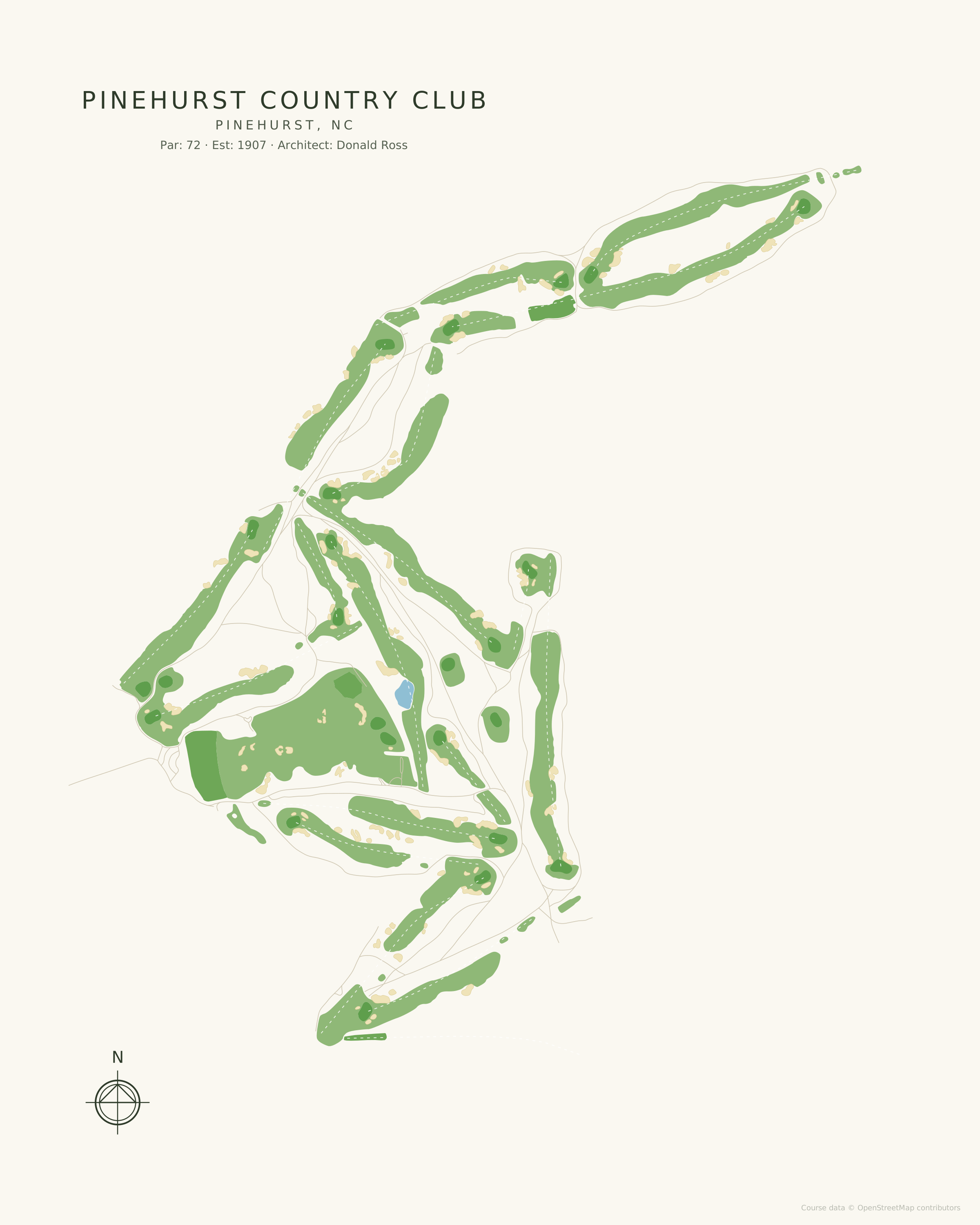
Created from actual data — every tee, fairway, bunker, and green, all in vivid detail.
Donald Ross came to the North Carolina Sandhills from Dornoch, Scotland, and recognized something in the sandy soil that no one else had: ground that could play like the seaside links of home, five hundred miles from the sea. He opened Pinehurst No. 2 in 1907 and then never stopped working on it. Ross lived in Dornoch Cottage, a pitch shot from the third green, and refined the course hole by hole until his death in 1948 — forty-one years of revision that made No. 2 less a design than a life's work.
Its signature is what Ross left out. There is no water and little forced carry; the defense is the greens — crowned, turtleback surfaces that accept the brave shot and shed the timid one into hollows and swales, where the golfer faces the game's most honest question: putt, chip, or pitch? Champions were made here early. Ben Hogan, winless in seven hard years as a professional, broke through at the 1940 North and South Open on No. 2 — the first victory of one of golf's greatest careers.
By the 2000s the course had grown green and soft, ringed with bermuda rough that Ross never intended. In 2010–11, Bill Coore and Ben Crenshaw stripped it all away — acres of turf out, hardpan sand and native wire grass back in — restoring the rumpled, sun-browned edges of Ross's original. The restored No. 2 hosted an unprecedented double in 2014: the U.S. Open and U.S. Women's Open in consecutive weeks, on the same course.
The championships tell the rest. Payne Stewart's 15-foot par putt on the 72nd hole in 1999 — fist punched through the Carolina mist, one of golf's immortal images — began a U.S. Open lineage that now runs through 2005, 2014, and 2024, with more promised: the USGA has made Pinehurst its first U.S. Open anchor site, with the championship returning in 2029, 2035, 2041, and 2047. No. 2 is not just where American golf was cradled. It is where the game keeps coming back.

Museum-quality Pinehurst No. 2 map art, traced from real course data — every crowned green, bunker, and wire-grass edge of Donald Ross's masterpiece. Four U.S. Opens of history included. Four designs, six sizes, or personalized with your round photo.
Course data © OpenStreetMap contributors (ODbL)