Custom PGA West Stadium Course artwork, made to order — a hand-styled map of the course, a painting-style print of your favorite hole, or a finished photo from your round.
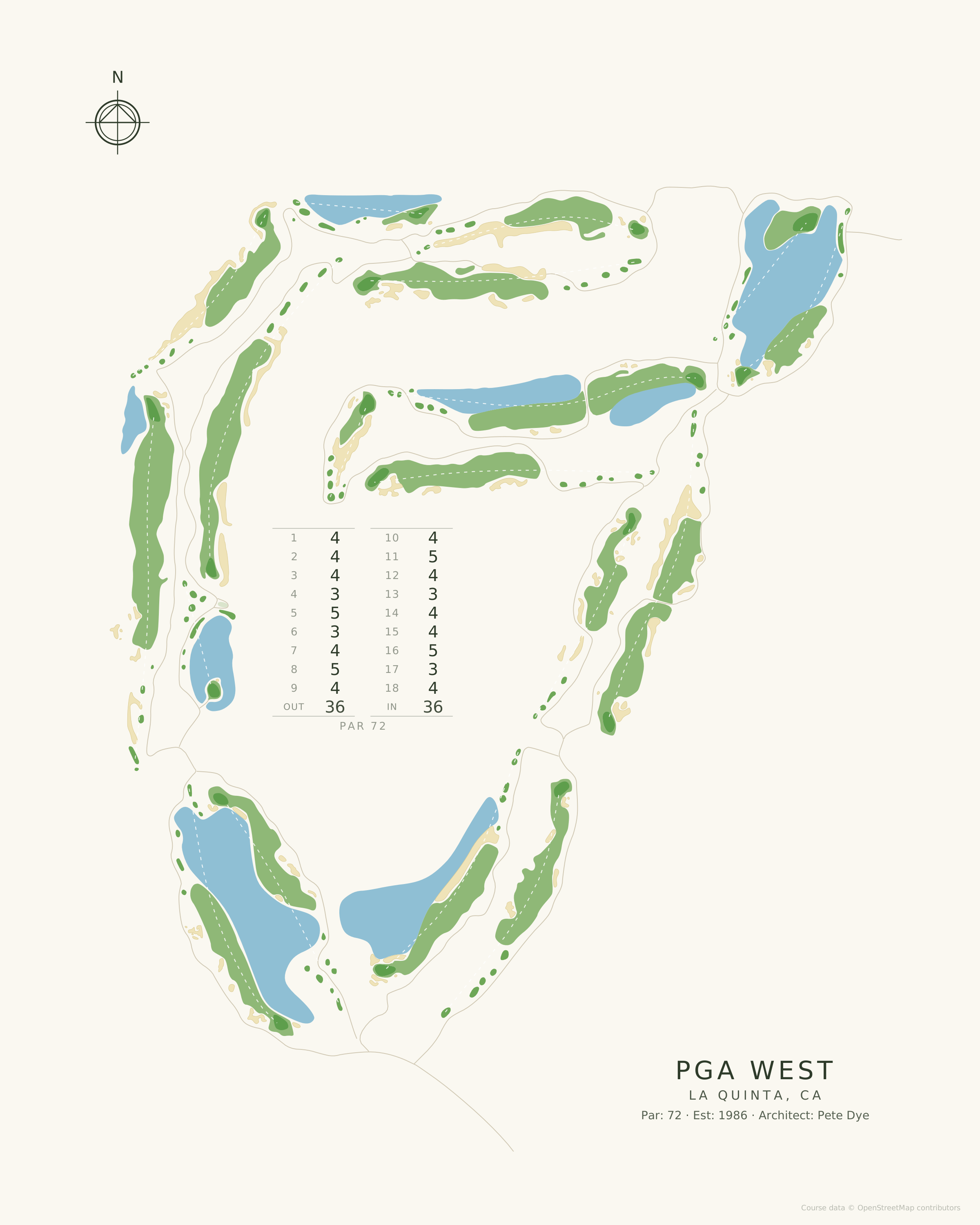
Created from actual data — every tee, fairway, bunker, and green, all in vivid detail.
When PGA West rose out of the Coachella Valley desert in the mid-1980s, its developers gave Pete Dye a brief no architect had ever been handed so plainly: build the hardest golf course in the world. Dye obliged. Moving mountains of sand at the foot of the Santa Rosa range, he carved a Stadium Course of moguls, railroad ties, water walls, and bunkers deep enough to swallow a golf cart — nearly 7,300 yards when it opened in 1986, carrying a USGA course rating of 77.1, the highest ever issued at the time.
The tour pros met it in January 1987 at the Bob Hope Classic, and the reaction became golf legend. Tom Watson didn't like the looks of it or the playability; Ray Floyd called it 'spiteful' and 'hateful'; Ben Crenshaw simply said it wasn't any fun. Dozens of players signed a letter to the commissioner demanding the course be pulled from the rotation — and it was. The tour stayed away for nearly three decades, which only made every amateur in America want to play it more.
The course never lacked for drama in exile. At the 1987 Skins Game, Lee Trevino stepped onto the island-green 17th — 'Alcatraz' — and holed a 6-iron from 167 yards for a $175,000 ace, still one of the most replayed shots in televised golf. The Stadium Course also spent years as a final-stage host of the tour's Qualifying School, where careers were made and broken on the same water-lined closing holes.
In 2016 the tour finally came home, and the Stadium Course now hosts the final round of The American Express each January. The scores are lower than Dye intended — Jon Rahm won here twice, and in 2024 twenty-year-old amateur Nick Dunlap shot 29-under to become the first amateur to win on the PGA Tour since Phil Mickelson in 1991 — but for the rest of us, the course remains exactly what it was built to be. You don't play the Stadium Course for your handicap. You play it to say you survived it.

Museum-quality PGA West Stadium Course map art, traced from real course data — Alcatraz, San Andreas Fault, and every Pete Dye trap. Four designs, six sizes, or personalized with your own round photo.
Course data © OpenStreetMap contributors (ODbL)