Custom Old Macdonald artwork, made to order — a hand-styled map of the course, a painting-style print of your favorite hole, or a finished photo from your round.
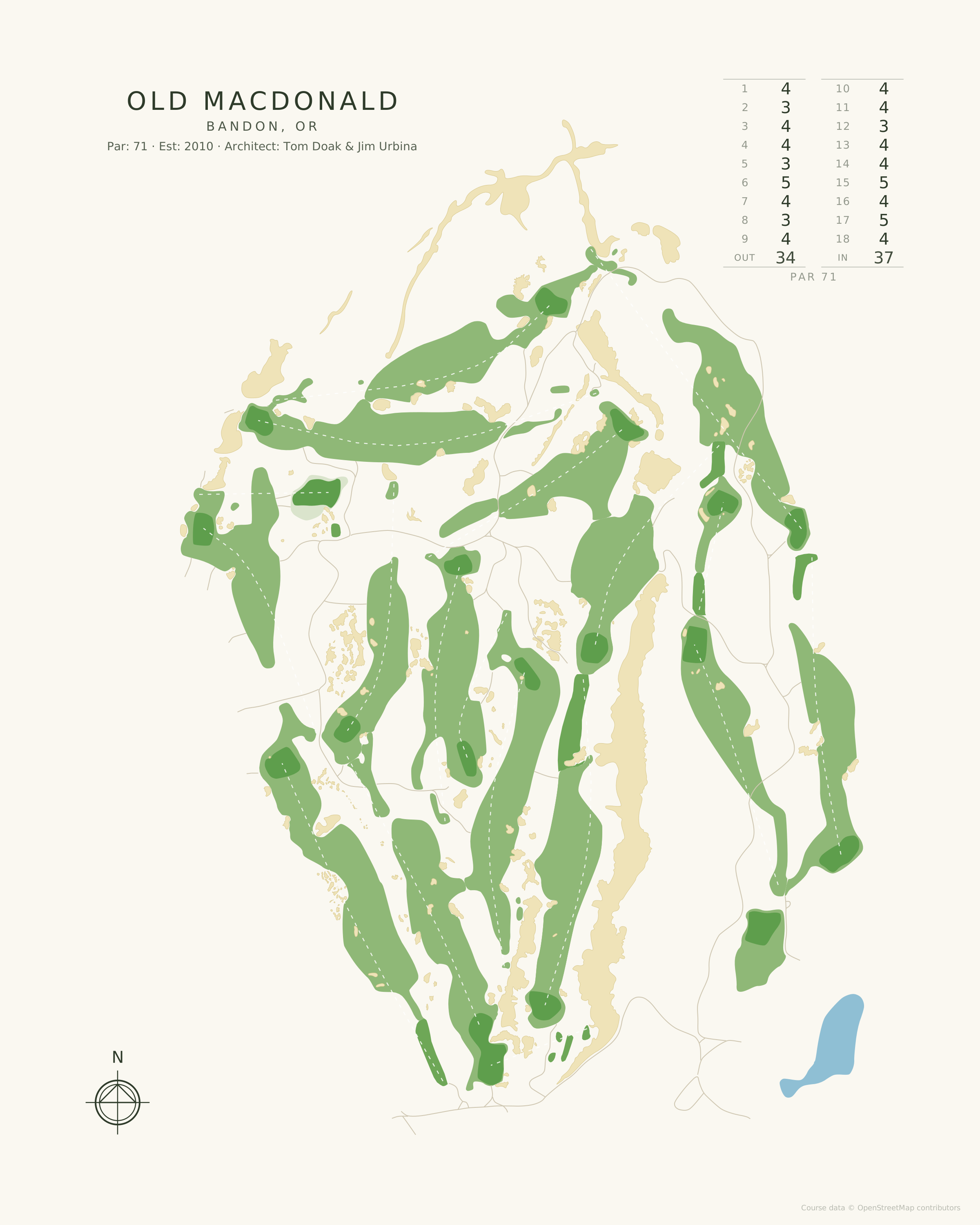
Created from actual data — every tee, fairway, bunker, and green, all in vivid detail.
By 2010, Bandon Dunes Resort already had three courses cut into the dunes above the Pacific — Bandon Dunes, Pacific Dunes, Bandon Trails — each one a hymn to firm-and-fast British links golf. For the fourth, founder Mike Keiser and architects Tom Doak and Jim Urbina looked further back than Scotland, to the man most credit with importing links golf to America in the first place: Charles Blair Macdonald.
C.B. Macdonald built the National Golf Links of America on Long Island in 1911 after crossing the Atlantic to study the great holes of the British Isles firsthand — the blind Alps at Prestwick, the plateau green at North Berwick's Redan, the perched target of Biarritz's famous hole. He didn't just admire them; he measured them, and rebuilt versions of them in New York. In doing so he invented the template hole, a vocabulary of world-class golf holes that his protégé Seth Raynor carried across the country for another generation. Doak and Urbina set out to build Macdonald a monument sized to his ambition — a course of templates, writ enormous, on a windswept Oregon headland Macdonald himself never saw.
The result is the most old-world, most experimental course at Bandon. Fairways run absurdly wide, some of the widest anywhere in the game, daring golfers to find their own angle rather than follow one prescribed line. Bunkering is sparse by design — Doak and Urbina chose a handful of vast, ragged pits over dozens of small ones — and the greens are the biggest in the resort, sprawling, humped, and often split into effectively two putting surfaces on a single hole, so that where the flag sits can change a green's personality entirely.
The name plays two ways at once: a nod to Macdonald himself, and a wink at the nursery rhyme, since the site had long been open grazing land above the bluffs before it became a golf course. Old Macdonald asks a different question than its Bandon siblings. It isn't chasing a number on the scorecard so much as testing whether a golfer can read ground the way Macdonald did — and whether the ground game he brought home from Scotland still has something to teach a modern player standing on the Oregon coast.

Museum-quality Old Macdonald map art, traced from real course data — every bunker, green, and fairway. Tom Doak and Jim Urbina's 2010 tribute to C.B. Macdonald, father of American golf architecture, built on the Bandon Dunes headlands with template holes and the resort's largest greens. Four designs, six sizes, or personalized with your own round photo.
Course data © OpenStreetMap contributors (ODbL)