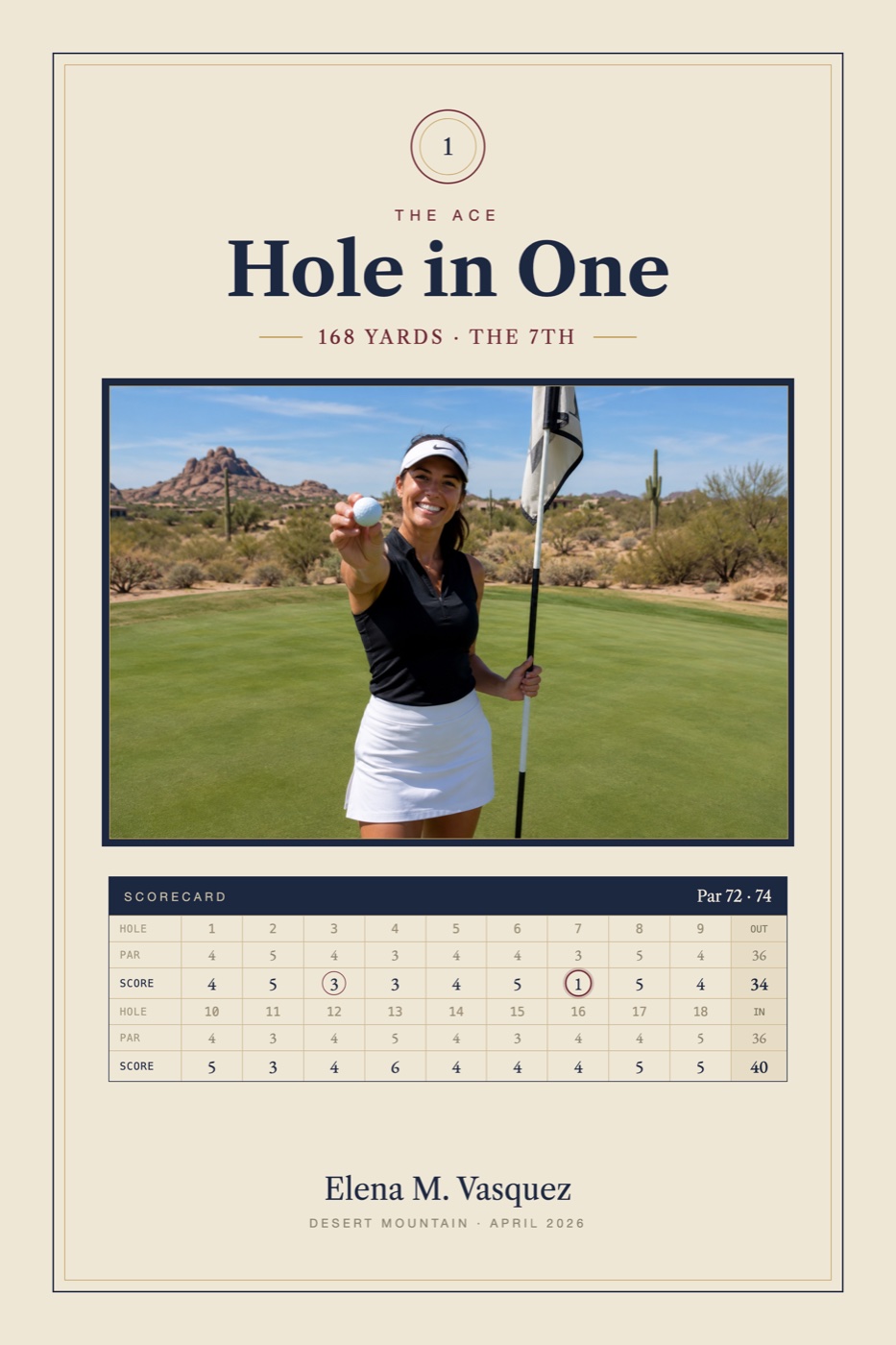
Custom Lajitas — Black Jack's Crossing artwork, made to order — a hand-styled map of the course, a painting-style print of your favorite hole, or a finished photo from your round.
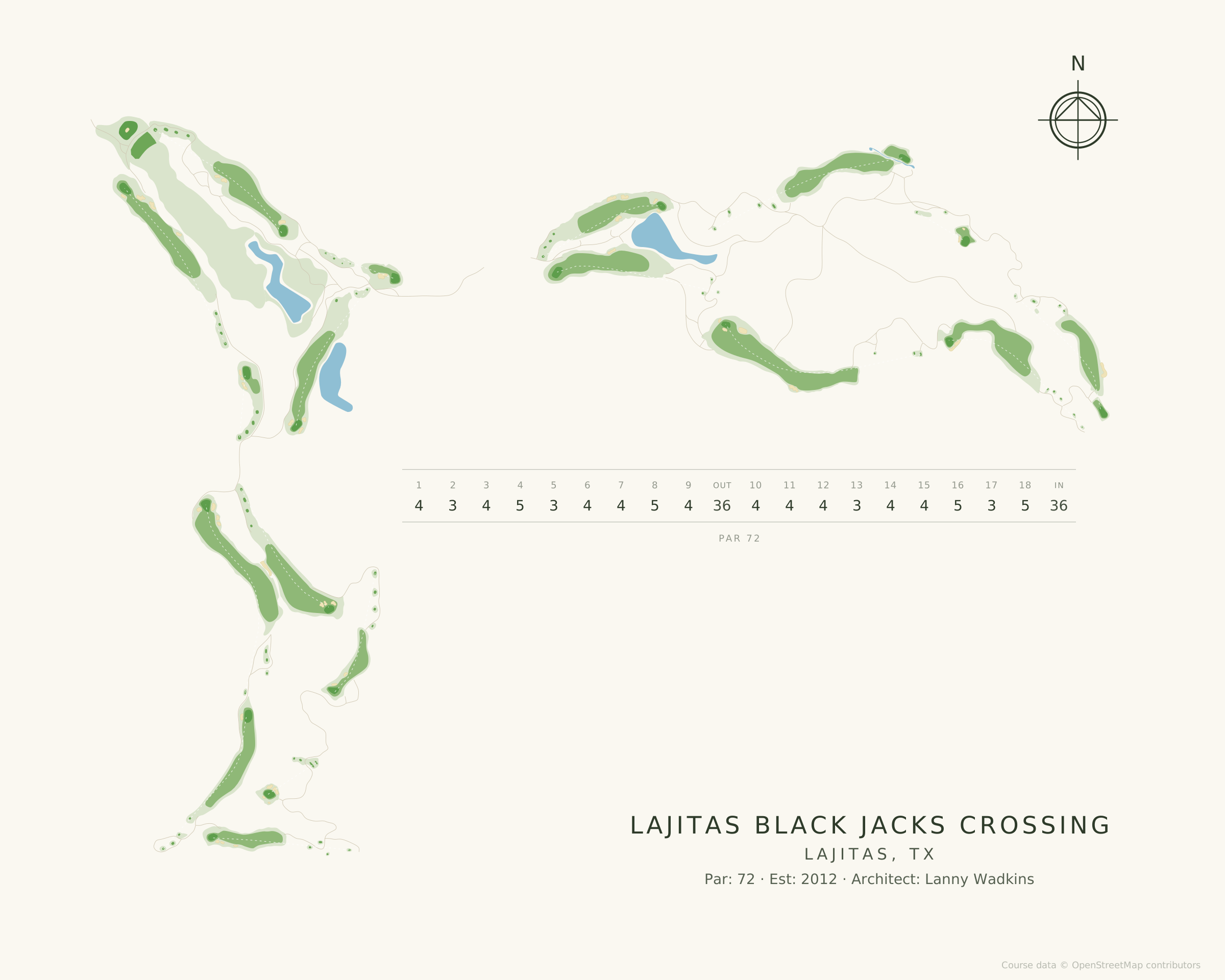
Created from actual data — every tee, fairway, bunker, and green, all in vivid detail.
The crossing came first, and it came a century before the golf. In 1916, in the aftermath of Pancho Villa's raids across the border, General John J. Pershing staked a cavalry post at Lajitas and sent thousands of troops south over a smooth, flat-rock ford in the Rio Grande — the best crossing between Del Rio and El Paso. Soldiers and locals took to calling the spot Black Jack's Crossing, after the general's nickname, and the name outlived the campaign by a hundred years.
Lajitas itself nearly vanished after that — a trading post and mercury-mining outpost stranded at the far edge of Texas, closer to the Sierra del Carmen than to any town most Texans could name. It took a Houston developer's improbable bet in the early 2000s to rebuild it into a resort, and it took Lanny Wadkins, the fiery Ryder Cup captain and major champion, to decide the ground deserved a golf course worthy of it. Working with architect Paul Cowley, Wadkins opened Black Jack's Crossing in 2012, routing all eighteen holes through the Chihuahuan Desert's ocotillo and creosote, beneath mesas and volcanic rimrock, with the river and the cliffs of Mexico standing sentinel along the boundary.
There is no pretending the location is convenient. Black Jack's Crossing sits inside Big Bend country, hours from the nearest interstate, arguably the most isolated resort golf course in the United States — a fact the course wears as a credential rather than an apology. The desert does the work most architects spend a budget trying to fake: real elevation, real rock outcrops, a real international border running along the edge of the property, and light so clear at dusk that the Chisos and Del Carmen ranges seem close enough to play a shot into.
Golfers who make the drive tend to talk less about their score than about the land itself — the quiet, the dark sky, the sense of standing on ground that soldiers forded a century before them. Black Jack's Crossing was never going to draw a major championship out to the border. It was built instead to be found, one determined traveler at a time, by golfers willing to go further than the game usually asks.
Museum-quality Black Jack's Crossing map art, traced from real course data — every bunker, green, and fairway of the remote Big Bend desert course. Four designs, six sizes, or personalized with your own round photo.
Course data © OpenStreetMap contributors (ODbL)