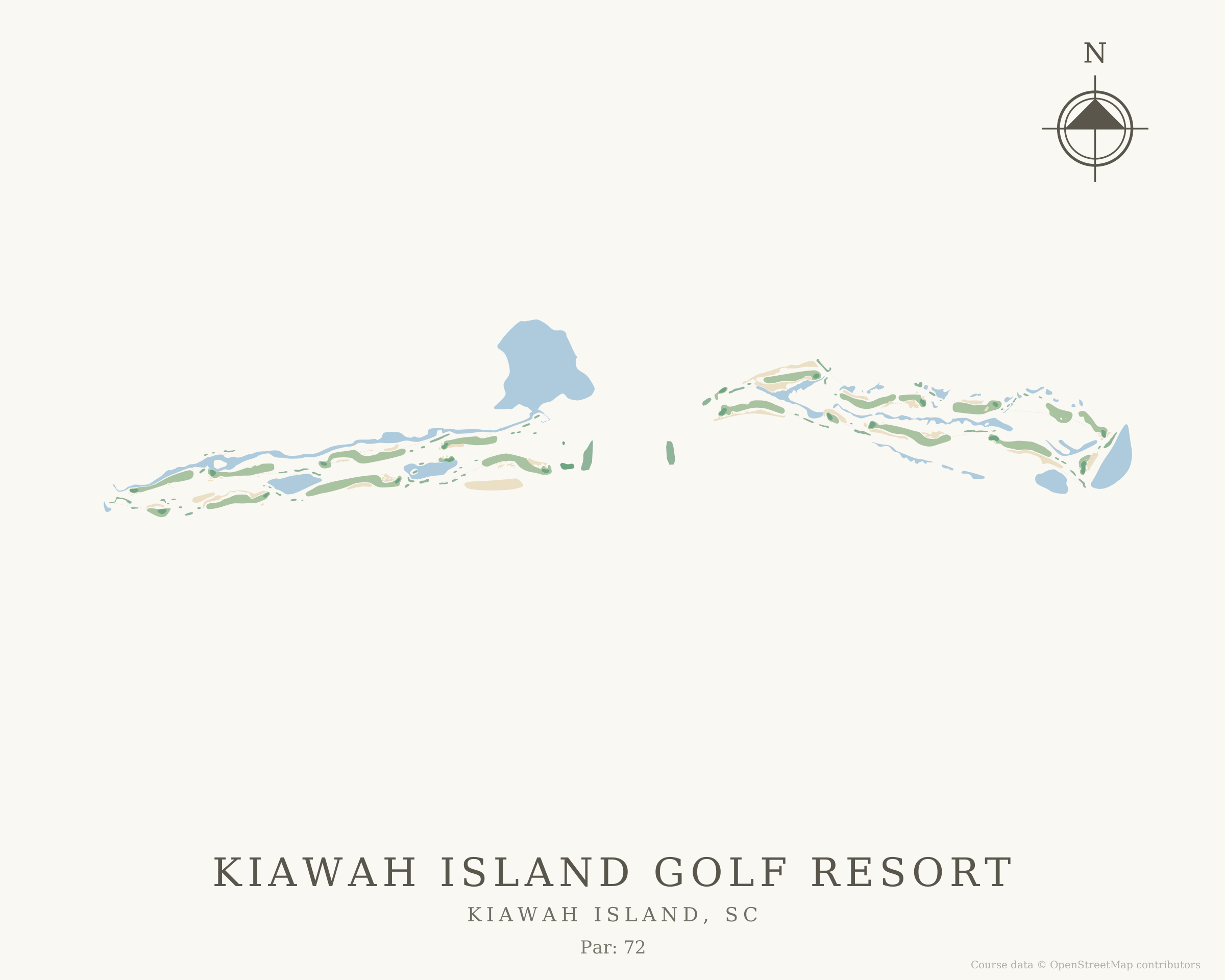
The Story
The Ocean Course exists because the PGA of America made a bet no one had made before: it awarded the 1991 Ryder Cup to a golf course that had not been built. What existed was the wild eastern tip of Kiawah Island — two and a half miles of dunes and marsh on the South Carolina coast — and Pete Dye, who was handed the land and a countdown clock. Hurricane Hugo tore through mid-construction in September 1989, and Dye kept building anyway.
The course's defining decision belongs to Alice Dye. Pete had planned to tuck the holes behind the dunes for shelter; Alice told him to raise the whole course up so players could see the Atlantic from every hole. It was a gift and a trap in one — the views are unbroken, and so is the wind. Ten holes run directly along the ocean, more seaside holes than any other course in the Northern Hemisphere, and the sea breeze rewrites the scorecard by the hour.
The Ryder Cup it was built for became 'the War by the Shore' — three days of September 1991 tension that ended when Bernhard Langer's six-foot putt on the final green slid past, giving the Americans a 14½–13½ win and giving the Ryder Cup its modern intensity. The majors followed: Rory McIlroy ran away with the 2012 PGA Championship by a record eight shots, and in 2021 Phil Mickelson, at 50, walked up the 72nd hole through a crowd that had burst the ropes to become the oldest major champion in history. The PGA Championship returns in 2031.
For all its championship armor, the Ocean Course is a resort course — anyone can play it. You walk it the way the pros did, wind in your ears, ocean on one side, and you come home understanding exactly why grown men in 1991 could barely draw the putter back.