The Story
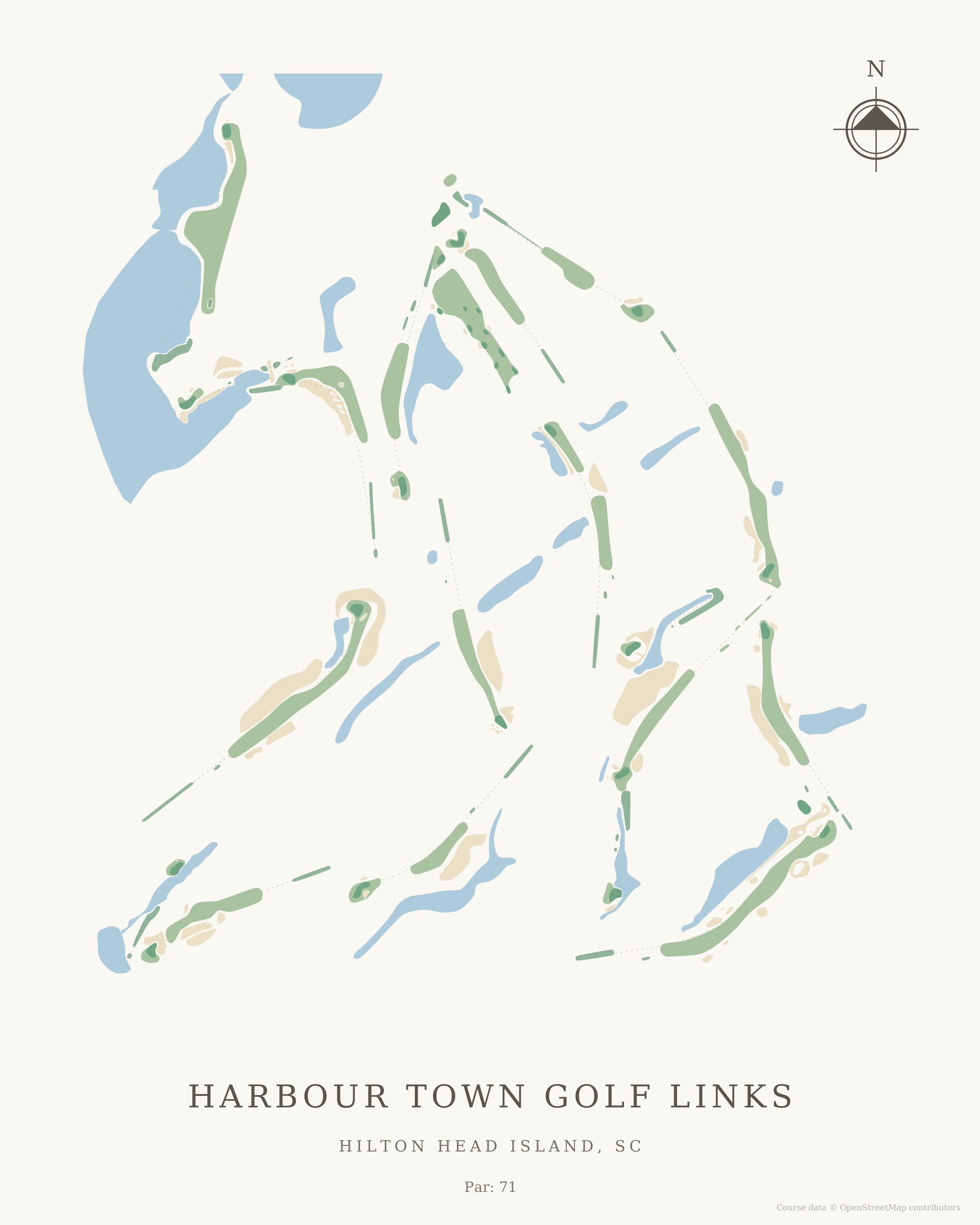
In the late 1960s, Sea Pines developer Charles Fraser wanted a golf course that would make the world notice Hilton Head Island. He hired Pete Dye — then still an insurance-salesman-turned-architect with radical ideas — and paired him with a 28-year-old Jack Nicklaus, taking one of his first steps into course design. What they built in 1969 was a rebellion: while the era's courses grew longer and wider, Harbour Town went short, tight, and fiendishly clever, threading fairways through live oaks and pines to greens smaller than anyone on tour had seen.
The course announced itself immediately. The week it opened, Thanksgiving 1969, Harbour Town hosted the first Heritage Classic — and Arnold Palmer won it, ending a 14-month victory drought and putting the brand-new course on every front page in golf. The tournament never left. Now the RBC Heritage, it has been played at Harbour Town every year since, traditionally the week after the Masters, with the champion pulling on a tartan plaid jacket instead of a green one.
Architecture buffs call Harbour Town a watershed — the course that made Pete Dye famous and helped turn golf design away from brute length and back toward strategy. Alice Dye, Pete's wife and a champion player herself, left her own signature here: the cedar planks bulkheading the 13th green. And behind the 18th, along the Calibogue Sound, Fraser built his red-and-white striped lighthouse purely as a landmark — the first lighthouse raised on the East Coast in 70 years — and accidentally created one of the most photographed finishing holes in golf.
Tour players adore it because it strips the game to its essentials: shape the shot or pay. For everyone else, it is the rare chance to walk a genuine PGA Tour venue at a resort — and to play toward that lighthouse with the sound opening up on the left, exactly like the pros do every April.