Custom Bandon Trails artwork, made to order — a hand-styled map of the course, a painting-style print of your favorite hole, or a finished photo from your round.
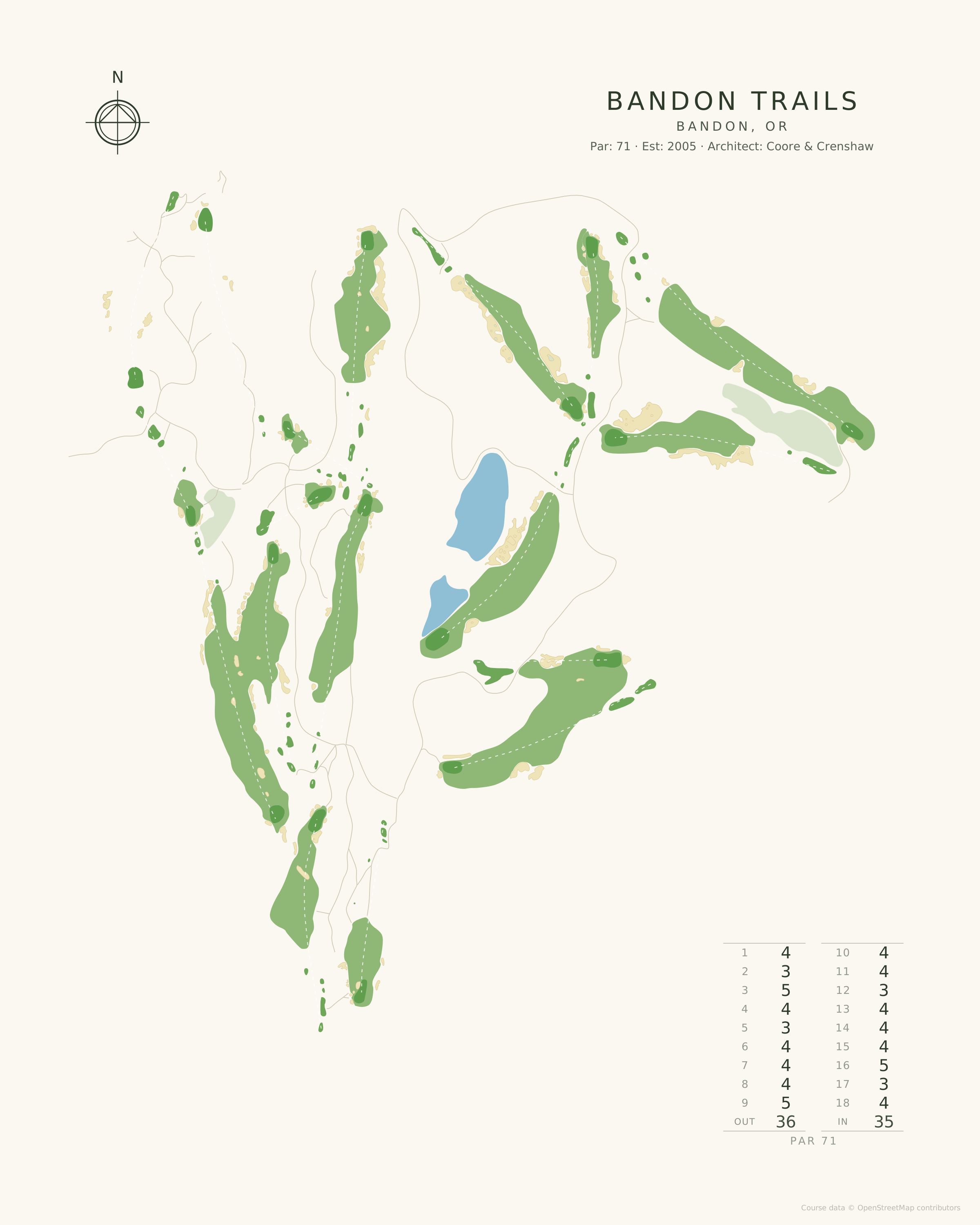
Created from actual data — every tee, fairway, bunker, and green, all in vivid detail.
By 2004, Mike Keiser's gamble on a remote stretch of the Oregon coast had already produced two of the most acclaimed golf courses built in a generation — David McLay Kidd's Bandon Dunes in 1999 and Tom Doak's Pacific Dunes in 2001, both run hard along the cliffs above the Pacific. For a third course, Keiser turned to Bill Coore and Ben Crenshaw, the design partnership built on the idea that a course should be found in the land, not imposed on it. What they found at Bandon was a piece of ground the earlier routings had passed over: acreage that started in dunes but quickly gave way to old meadow and a stand of mature forest, running away from the water entirely.
Coore and Crenshaw did not fight that. Bandon Trails opens among the dunes near the clubhouse, much like its coastal siblings, then does something no other course at the resort does — it turns inland, crossing an open meadow before entering a corridor of pine and fir where the holes are cut through the trees rather than blown open to the wind. It is the only routing at Bandon Dunes Resort that leaves the Pacific behind for most of its round, trading ocean drama for a quieter, more varied journey across three distinct landscapes on a single walk.
That variety was the point, not a compromise. Coore and Crenshaw are minimalists by reputation — architects who route around what a site already offers rather than reshaping it to fit a plan — and Bandon Trails is often cited as one of the clearest demonstrations of that philosophy in their portfolio, alongside Sand Hills and Friar's Head. The course finds its way back to the dunes for the closing holes, so the round that began and ends in sand spends its middle act somewhere else entirely, a rhythm unlike anything else at the resort.
Bandon Dunes Resort was built on the premise that a golf trip should mean walking, caddies, and courses that reward the eye as much as the scorecard, and Bandon Trails holds to that as firmly as the coastal courses around it. It simply asks a different question of the golfer: that the ocean, once out of sight, can still be trusted to return.

Museum-quality Bandon Trails map art, traced from real course data — every bunker, green, and fairway. The only course at Bandon Dunes Resort that leaves the ocean behind, routed by Bill Coore and Ben Crenshaw through dunes, meadow, and forest. Four designs, six sizes, or personalized with your own round photo.
Course data © OpenStreetMap contributors (ODbL)