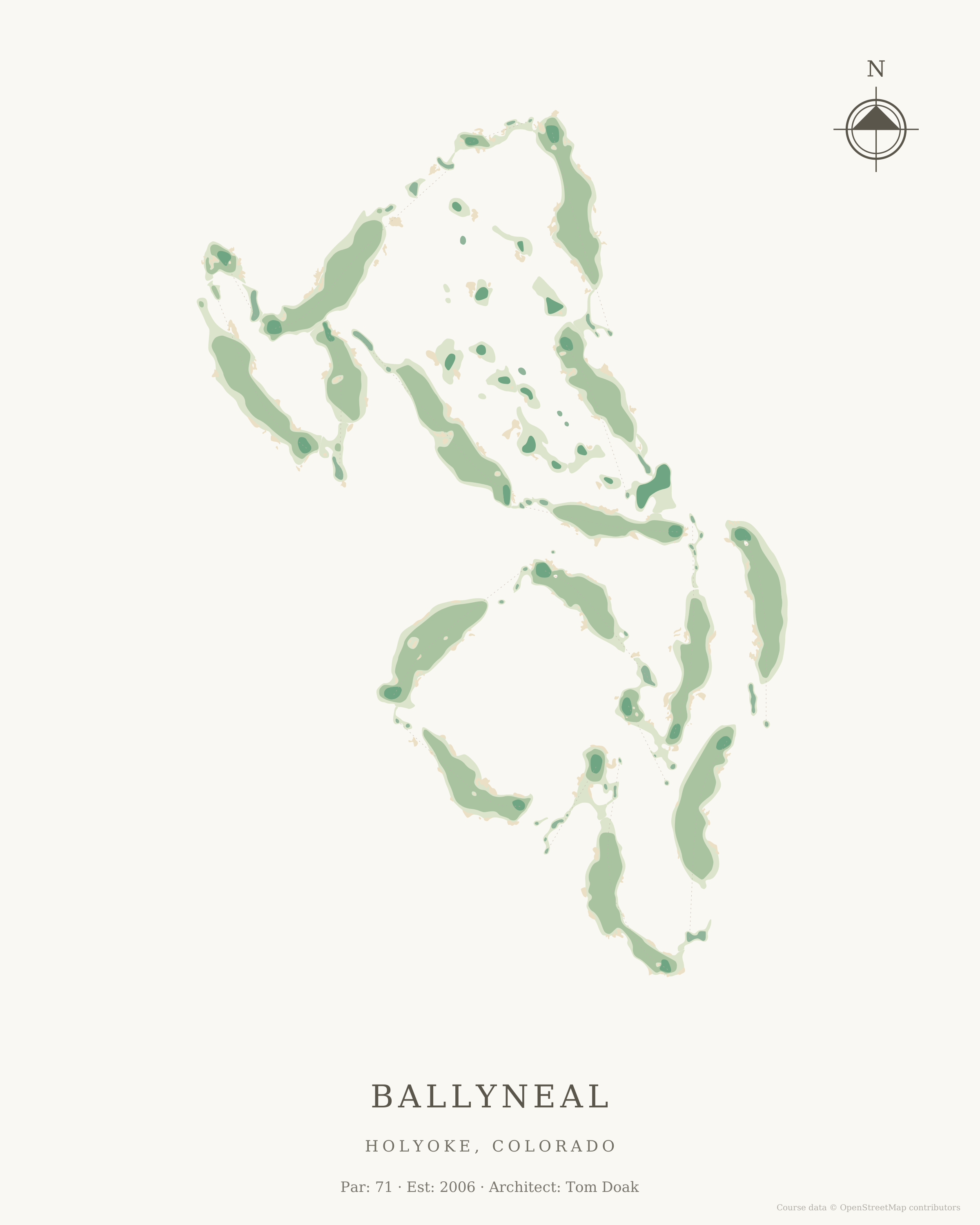
The Story
Around 1979, a young Holyoke golfer named Jim O'Neal looked at the rumpled dunes south of town — the ones locals call the chop hills — and saw something no one else did: the linksland of Ireland and Scotland, transplanted to the High Plains. The idea simmered for two decades until his older brother Rupert pushed it forward, proposing a golf course to go with the family's hunting club. The brothers bought roughly 700 acres of dunes from a local farmer, and the 'Hunt Club' in Ballyneal's name has been literal ever since.
In 2002 they hired Tom Doak, fresh off Pacific Dunes at Bandon, and his Renaissance Golf crew spent two years walking the property and refining a routing before moving much dirt at all. When construction finally came, it was almost improvisational — the course was shaped in about 21 weeks, working from what amounted to a one-page plan, because the land needed so little correcting. The holes tumble through dunes as tall as 150 feet, past natural blowouts and ridgelines the wind made long before golf arrived.
Ballyneal opened in 2006 and refuses, on principle, most of what American golf takes for granted. There are no carts — you walk, with a carry bag, a pull cart, or a caddie. There are no tee markers: the scorecard gives a yardage range for each hole and you choose your own starting point, matching the course to your mood and the wind. Tee to green the turf is fine fescue, firm and fast and the color of the prairie itself, so the ball runs and bounds the way it does on the great links across the ocean.
It matured almost immediately into a pilgrimage. Travel + Leisure Golf named it Course of the Year when it opened, the rankings followed, and now golfers drive three hours northeast from Denver — past the last stoplights, nearly to Nebraska — to spend a few days playing golf the old way. The remoteness isn't a drawback. It's the point.